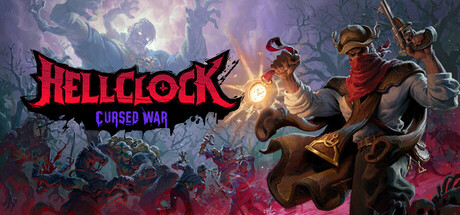
Hell Clock sets its Diablo-style loot-and-slaughter in an alternate-history version of Brazil's 1896 War of Canudos, and that setting alone separates it from a genre that mostly recycles the same dark-fantasy hellscape. Rogue Snail built a real historical backbone under the demons, and it shows in ways a generic setting never could.
The build-crafting is the game's selling point. Skill trees, relics, and loot combine into playstyles that range from summoning armies of Catholic Guards to stacking meteor showers to spinning-blade builds that clear a screen on their own, and the comic-book art direction keeps all of it readable even at full chaos. Soulstones and a Memory Level system carry progress between runs, and the game holds a steady sixty frames on high settings without the stutter that plagues a lot of its competition.
The title mechanic is the game's biggest gamble, and it doesn't always pay off. A ticking countdown pressures you to keep moving instead of turtling, which sounds great until it produces a death that feels cheap rather than earned. Enough players agreed that a sizable share turn the clock off entirely, which undercuts the one system meant to set this game apart. The relic pool is bloated with low-impact duplicates. Early bosses go from threatening to trivial once your stats catch up, and the difficulty curve swings between too grindy and too easy depending on the settings you pick. The Canudos War premise is stronger than what the moment-to-moment story does with it.
Eighty-three percent positive on Steam, Very Positive both all-time and over the last thirty days, and critics landed in a tight cluster from the high seventies to low nineties across more than a dozen outlets. That's a rare level of agreement for an indie ARPG.
Buy it. The build variety alone is worth the twenty dollars. Turn the clock off if it's not clicking for you, and don't feel bad about it.
Consulted for this review:
 Official art · via Steam