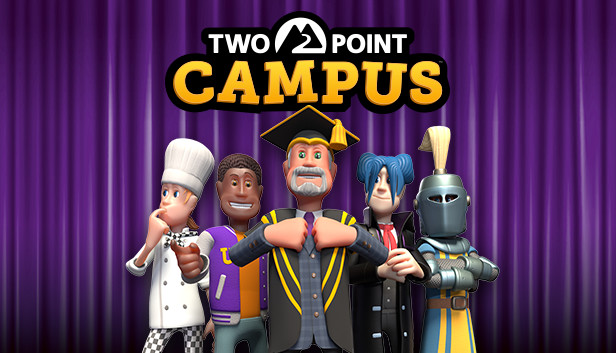
Two Point Campus takes the studio's Theme Hospital-descended management formula and moves it out from under a single roof. Two Point Hospital confined players to interior floor plans; Campus hands over an entire outdoor plot instead, tasking players with building a university from the ground up, quads, pathways, and all, then filling it with courses that range from believable (Science, Culinary Arts) to the kind of joke degree the series built its reputation on (Knight School, Gastronomy, a program in "Spy" training). SEGA published it in August 2022, and it has since picked up five expansion packs, a sign the format found an audience worth continuing to feed.
What Works
The outdoor building tools are the real addition here, and they change how a campus feels to design. Hospital's puzzle was always about cramming departments into a finite indoor footprint; Campus adds landscaping, exterior room placement, and a grid that extends well past the building's walls, so a university can sprawl the way a real one does. Terraforming tools let players carve hills and lakes into the plot before a single wall goes up, and the freedom to plant a Knight School dojo next to a duck pond does a lot to make each campus feel like a specific place rather than a reskin of the last one.
The course system gives that space something to do. Each of the game's fictional courses comes with its own quirky mechanics and requirements, from combat-training obstacle courses to a Gastronomy program that has students cooking actual meals to sell, and juggling three or four of them on one campus creates the kind of overlapping-systems management that made Two Point Hospital click in the first place. Student relationships add a soft social layer on top, letting friendships and rivalries develop as students move between classes, which gives even a slow admin turn something small to watch.
What Doesn't
The format's second outing shows where the seams are. Campus after campus, the underlying rhythm repeats: build the same core departments, unlock the same handful of systems, chase the same three-star rating checklist with a new coat of paint. Critics who covered both games tended to note that a lot of what makes Campus fun is Hospital's own toolkit wearing a graduation gown, and after ten or twelve campuses the joke-course novelty stops doing as much work to disguise it.
Reception splits along an interesting line worth flagging rather than smoothing over: Steam's broader audience rates it 89 percent Very Positive across nearly 2,800 reviews, and critics landed it at a Metacritic 83, but the site's own (much smaller) user sample skews notably softer, sitting closer to mixed. That's a small-sample quirk more than a real contradiction, but it lines up with a genuine minority complaint that the game's deeper systems, staff training trees, research management, event scheduling, take a while to click and can feel more fiddly than fun before they do.
A worthy sequel that never quite outgrows its parent. Two Point Campus takes a formula that already worked and gives it room to breathe outdoors, and for anyone who hasn't burned out on Two Point Hospital's rhythms, that's still plenty. Anyone hoping for a bigger structural leap between games should keep expectations calibrated to "more," not "different."
Consulted for this review:
 Official art · via Steam