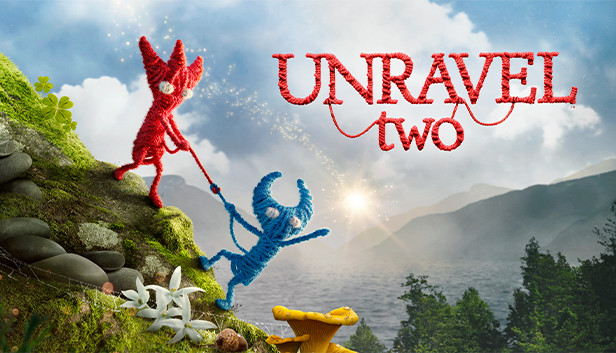
Unravel Two swaps the original's solitary Yarny for a pair of them, two threads of yarn tied together by their own connecting strand, sent through Scandinavian-inspired woods and industrial ruins either solo or in local co-op. Coldwood Interactive built the sequel around that one change, and it reshapes the entire design: puzzles now lean on two bodies working in tandem, one Yarny anchoring a line while the other swings across it, and Electronic Arts shipped it a mere two years after the original, alongside a surprise same-day release announcement at their own E3 conference.
What Works
The two-Yarny puzzle design is a genuine evolution of the original's toolkit, more than a co-op mode bolted onto the same mechanics. Levels are built around the interplay between the pair, one character bridging a gap for the other, both threads combining into a single stronger line for tougher traversal sections, and in local co-op specifically, that interplay turns into real, readable cooperative platforming rather than two players independently solving the same puzzle side by side. GameSpot's review called it "welcoming even at its most foreboding," and that softer, friendlier tone carries through the whole runtime.
Critics responded to that shift more warmly than the original's own audience did. Metacritic's aggregate sits at a respectable 76, and reviews at launch praised the tighter, more confident platforming that came from a team making a second attempt at the same basic idea, unencumbered by the pressure of establishing Yarny as a character from nothing.
What Doesn't
The story loses the thing that made the original stand out. The first Unravel used its wordless storytelling to explore one old woman's specific memories; the sequel drops the connection to a defined narrator and setting in favor of a looser, more abstract theme about friendship and connection, and the emotional specificity that made critics compare Unravel to a short film mostly doesn't survive the trade. Steam's own audience noticed the difference directly: all-time reviews sit at 74 percent Positive, down from the original's 87 percent, and the most recent 30-day reviews have dipped further, to 71 percent.
The solo experience takes the hit hardest. Playing without a second person means controlling both Yarnies simultaneously, and asking one player to coordinate two connected bodies through platforming sequences designed for two sets of hands adds a layer of fiddly, occasionally frustrating input management that never fully justifies itself outside actual co-op. The main story also runs shorter than the original's already-brief runtime, around five hours against Unravel's six, leaving less room for the sequel's ideas to develop before the credits roll.
A pleasant enough co-op diversion that isn't the sequel Unravel's fans wanted. Unravel Two plays smoother and looks as good as the original, and the two-Yarny puzzle design is a real, thoughtful evolution of the mechanic. But it traded away the specific, melancholic story that made the first game memorable for something friendlier and much less distinctive, and the people who loved Unravel for that story are the ones most likely to notice what's missing.
Consulted for this review:
 Official art · via Steam