File No. 022 — Reviewed Aug 2026
Ruinarch
A villain-sim god game with a clever indirect-manipulation hook that runs out of tricks.
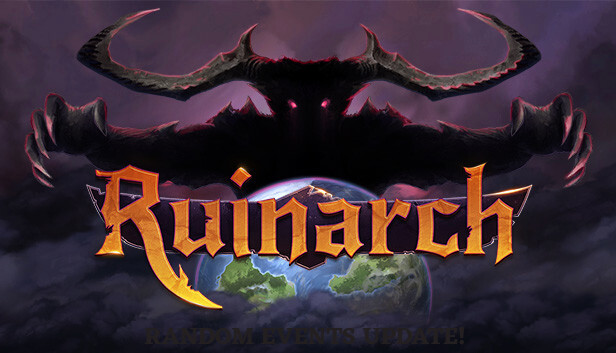 Official art · via Steam
63%
Mixed Bag
A villain-sim god game with a clever indirect-manipulation hook that runs out of tricks.
Official art · via Steam
Ruinarch casts you as an overlord who never touches the villagers directly. Curses, planted rumors, captured monsters, and environmental spells nudge a town toward ruin while its people react to manipulation you never show your hand on. Three overlord archetypes, Lich, Puppetmaster, and Ravager, each build toward that goal differently, and villagers carry hidden traits like alcoholic or kleptomaniac that the game's systems can exploit in specific, memorable ways.
The indirect-influence design is the real hook: villagers form relationships and grudges on their own, and prodding those relationships, rather than issuing orders, produces stories reviewers consistently call the game's best feature. Capturing enemies and repurposing them, turning a slain Angel into a Fallen Angel for your own side, gives thematic army-building a payoff beyond stat numbers.
The 1.0 patch in 2023 added monsters, ideologies, and new villager actions on top of the Early Access build, and the manipulation fantasy holds up well enough across a first playthrough or two to explain why the small community still playing it stays loyal.
The toolkit doesn't grow with the playtime. Archetypes draw from overlapping spell pools, so a player who has mastered one path finds the others familiar rather than fresh, and Roundtable Co-Op flagged how quickly the endgame turns into waiting on mana regen instead of making new decisions. Corrupted villagers don't hide their crimes convincingly, which undercuts the secret-puppetmaster fantasy the marketing leans on.
UI gaps compound the problem: no minimap, a restrictive minimum camera zoom, and tutorialization that reviewers called insufficient for a systems-heavy game. Steam rates it Mixed at 62 percent across roughly 1,300 reviews, and the current playerbase has shrunk to single digits concurrent, down from a 2020 Early Access peak over a thousand. Critic coverage is close to nonexistent: one 2020 outlet review during Early Access is the only score on record, so there's no real aggregate to lean on.
Worth a sale price. The manipulation-not-control hook is worth experiencing at least once, and the small, dedicated community left playing it backs that up, but don't expect the toolkit to keep expanding the longer you stay.